
Yeshua’s Sukot Tradition
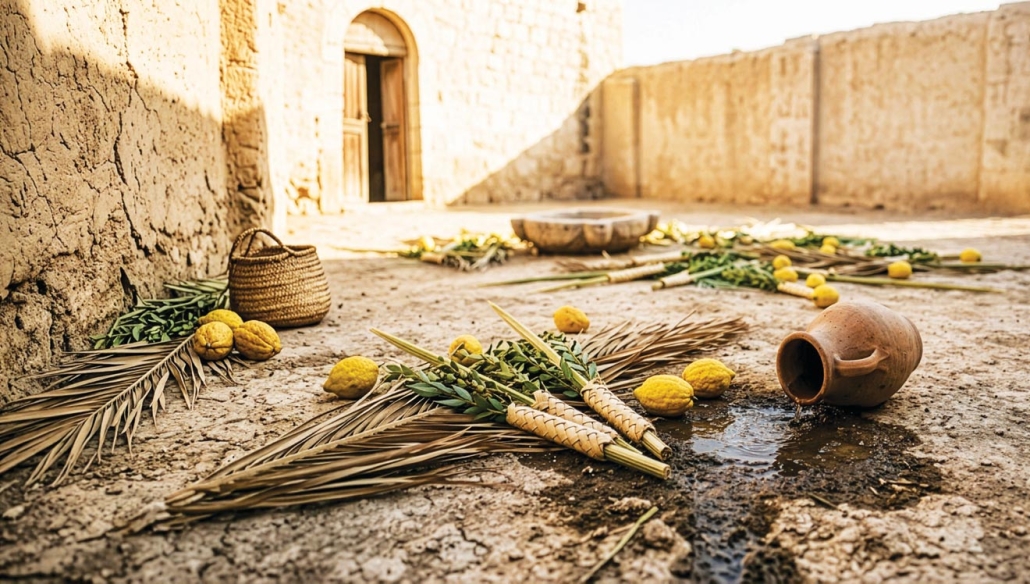
As a Jew, Yeshua kept the Torah of Moses and fully participated in the Jewish culture of His day. But that doesn’t mean that He fully embraced the Judaism and traditions which were reshaping that culture. On the contrary, we find Yeshua in the Scriptures not only challenging the traditions and the zeal many had for them, but also using and exploiting the traditions to point the people to Himself. And one of the occasions on which we find Him doing this most effectively was on the last day of the Feast of Sukot, known in Judaism as Hoshana Rabbah.
The tradition of Hoshana Rabbah has no biblical origin. According to the Torah, Sukot is a seven-day feast with no special features prescribed for the last day. It wasn’t until sometime during the Second Temple period that the tradition became part of Judaism’s Sukot observance. A daily ritual was added to the seven days of Sukot to entreat God for rain and abundant growth in the coming year. This ritual eventually intensified and became a grand community event on Sukot’s seventh day, leading it to be known as Hoshana Rabbah—or “the Big Hosanna.” The ritual included a water pouring ceremony accompanied by trumpet blasts, singing, the waving of lulavs (handheld, closed palm fronds bound with myrtle and willow branches), and tens of thousands of Jewish pilgrims who had come to Jerusalem for the Feast. Everyone in attendance would look expectantly to the heavens and beg God for salvation, crying out “Hoshiya!”—“Save us now!” As they circled the altar seven times, they would recite Psalm 118:25-26,
I beseech Thee, O Lord, save, I pray Thee; I beseech Thee, O Lord, prosper, I pray Thee. Blessed is He who is coming in the Name of the Lord… (jps)
This same tradition is most certainly the event being portrayed in the seventh chapter of the book of John. He clearly states that it was taking place during the Feast of Sukot (John 7:2,14), and that it happened “on the last day of the Feast—the loudest” (John 7:37), thus matching the description of Hoshana Rabbah.
According to John, Yeshua had gone up to Jerusalem for the Feast, and had been interacting throughout the week with the Jewish crowds in the Temple. Finally, when the last day arrived, the ritual of Hoshana Rabbah was in full swing. All at once, in the middle of the extremely loud cacophony—the pouring of the water while looking to the skies, the begging for God to send rain for their crops, the pleading with Him to provide for their prosperity, the crying out for His salvation with wails of “Save us now!”—
…יֵשׁוּעַ, Yeshua stood and shouted, saying, “If anyone thirsts, let him come to Me and drink! He who is believing in Me, as the Scripture said—out of his belly will flow rivers of living water!” (John 7:37-38, mjlt)
What Yeshua does here cannot be overstated. He hasn’t come to join the throng of worshipers to pray for rain and implore God for salvation. Instead, taking full advantage of the fact that so many people are assembled for this specific ritual, He goes straight into the middle of the crowd, stands up, and begins not participating in the ceremony, but interrupting it—disrupting it, challenging the tradition’s premise, hijacking the water symbolism, and then diverting the people’s attention from the skies and the ceremony to the salvation standing right before their eyes.
Suddenly, no one is participating in Hoshana Rabbah anymore. They are looking and listening to Yeshua—the One who can save and water not their crops, but their souls.
Yeshua’s approach to the tradition was to step into the middle of it—not to take part, but to throw it into chaos. He did it to get everyone’s attention, and then to speak the things that would lead His people to belief and life. Yeshua routinely called out and rebuked those who favored the traditions and set the Scriptures aside to keep them (cf. Mark 7:9,13). He was completely silent on any idea that traditions are good to keep just as long as they “don’t contradict Scripture.” Yeshua’s attendance at Hoshana Rabbah, then, wasn’t Him celebrating a Talmudic invention. He was instead challenging it, rendering it useless, and then using the opportunity to point to salvation in Him.
The account in John 7 perfectly exemplifies Yeshua as a disruptive force against a religion that is too busy focusing on traditions to notice the salvation right in front of it. Hoshana Rabbah does not point toward Yeshua in any way, but literally looks in the wrong direction. Rather than fulfilling Hoshana Rabbah, Yeshua contradicts it, and then takes advantage of the moment to redirect and fulfill the intense pleading of the people’s desperate hearts.
Did this post bless you?
♥
The lesson of Yeshua on Hoshana Rabbah teaches us that Judaism and Jewish tradition, despite whatever value they may hold, are looking in the wrong place. As it was with the religious Jews of Yeshua’s day, tradition will, at worst, point us away from God and His word, and, at best, split our focus and leave us misinformed. If we truly want to keep our eyes on what matters—to know how to live and walk in Messiah every day—then we need to know the difference, and make a distinction, between the words of Judaism and the word of God.
What do you think? Share your thoughts in the comments below!



Leave a Reply
Want to join the discussion?Feel free to contribute!