
Judaism’s Misconceptions About Rosh Hashanah
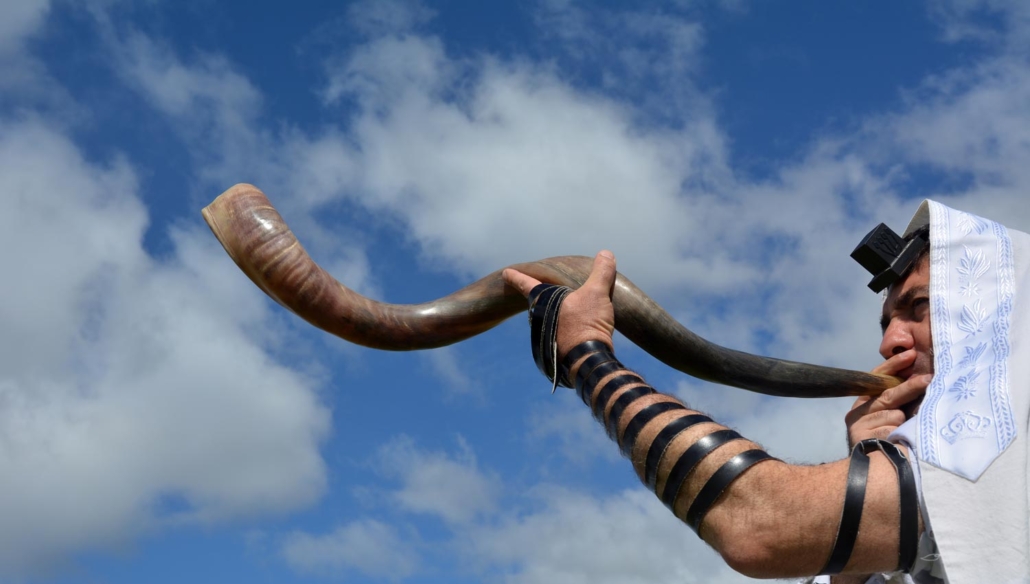

Rosh Hashanah begins Judaism’s high holy day season, when synagogues are packed full to hear the blowing of the shofar, and the people begin the ten-day period of repentance and judgment in the hopes of ensuring their inscription in the book of life for one more year. And yet, not one part of that sentence can be supported with Scripture. Sadly, the beautiful and profound traditions of Rosh Hashanah—which Messianics have relied upon for their theology and practice—are no more than the inventions of man. Here are just four of the misconceptions that Judaism has about Rosh Hashanah.
Misconception #1—Rosh Hashanah is the Jewish new year. The Talmud says there are four new years, and Rosh Hashanah recognizes one of them. This is why it is called “Rosh Hashanah,” meaning “head of the year,” because it marks the beginning of Judaism’s annual civil year. But even according to this extra-biblical calendar, Rosh Hashanah falls on the first day of the seventh month of the year, during Autumn, while the Scriptures only tell us to count years according to the beginning of the year—that is, starting with the first month, in Spring. “This month shall be unto you the beginning of months; it shall be the first month of the year to you” (Exodus 12:2, JPS). So Rosh Hashanah does not mark the beginning or turn (Exodus 34:22) of a new year, but is simply a special first day of the month, occurring half-way through the biblical calendar.
Misconception #2—Rosh Hashanah is called “Rosh Hashanah.” In truth, the Scriptures never call the first day of the seventh month by that name. The Torah refers to this appointed time in two distinct ways: as zikh’ron t’ruah (Leviticus 23:24) and yom t’ruah (Numbers 29:1)—zikh’ron, meaning “memorial” or “remembrance”; yom, meaning “day”; and t’ruah, being associated in Judaism with the blowing of trumpets or shofars. Yet neither “zikh’ron t’ruah” nor “yom t’ruah” have anything at all to do with the time of year, much less the head of the year. Rather, they simply indicate the commanded activities for the day. Referring to this appointed time as Rosh Hashanah, then, is not merely a misnomer, but adds to and changes its main purpose, focus and orientation, according to the Scriptures.
Misconception #3—Rosh Hashanah is a biblical Feast. According to the Torah, only the three pilgrim feasts are referred to in the Hebrew as “feasts” or “festivals”: the Feasts of Unleavened Bread (Matzah), Weeks (Shavuot), and Booths (Sukot). Passover—which launches the week-long Feast of Unleavened Bread—is also considered a Feast. And that’s all. Neither “firstfruits,” nor Yom Kippur, nor Rosh Hashanah are feasts. Since this is the case, it should immediately change our perception of the importance of Rosh Hashanah/Yom T’ruah, and our priority in celebrating it. While Yom T’ruah remains an essential and pivotal appointed time, it is a far cry from the High Holy Day status assigned to it in Judaism and adopted by Messianics. Our zeal for and focus on Yom T’ruah should be tempered in relation to the actual biblical feasts.
And lastly, misconception #4—the primary, material feature of Rosh Hashanah is the blowing of the trumpet or shofar. The word “trumpet” or “shofar” appears nowhere in the Hebrew of Leviticus 23 or Numbers 29, even though many Bible translations add it there. This is because Judaism has wrongly inferred a command for the shofar from the word t’ruah. But t’ruah, as correctly translated by the 1985 JPS, simply means “loud blasts [of sound].” Not only does the abundance of biblical evidence in no way limit the making of t’ruah to the shofar, the Scriptures indicate that the primary t’ruah-making instrument is actually the human voice. In Scripture, t’ruah is most often a loud, alarming shout—as in the people’s powerful shout at Jericho (Joshua 6:20) and their shout of praise in Jerusalem (2 Samuel 6:15, Ezra 3:13).
For all the traditions, assumptions and inferences, the reality is that the Torah concerning Yom T’ruah is extremely sparse, essentially boiling down to those two simple words: zikh’ron t’ruah—a memorial with loud blasts of sound. While the Scriptures never explain what is supposed to be memorialized or remembered, Yom T’ruah’s unique proximity to the Day of Atonement and the Feast of Sukot may help us make a reasonable application. And as for the sound of t’ruah, the pattern we see in Scripture is that it is extremely loud, it is sustained, and it points to and praises our great God.
Did this post bless you?
♥
What Judaism misconstrues about Yom T’ruah is what most of us get wrong about God’s word: we assign it our own meaning, and make it far more elaborate than it needs to be. Yom T’ruah isn’t meant to be observed in mournful silence as we bear witness to the voice of the shofar in its monotone, stuttering solo. Rather, with a cacophony of instruments and a roaring chorus of voices, we can audibly confess with our mouths not only our wrongs, but our gratefulness and thankfulness and overabundant praise for the One whose voice we should always hear the loudest.
What do you think? Share your thoughts in the comments below!
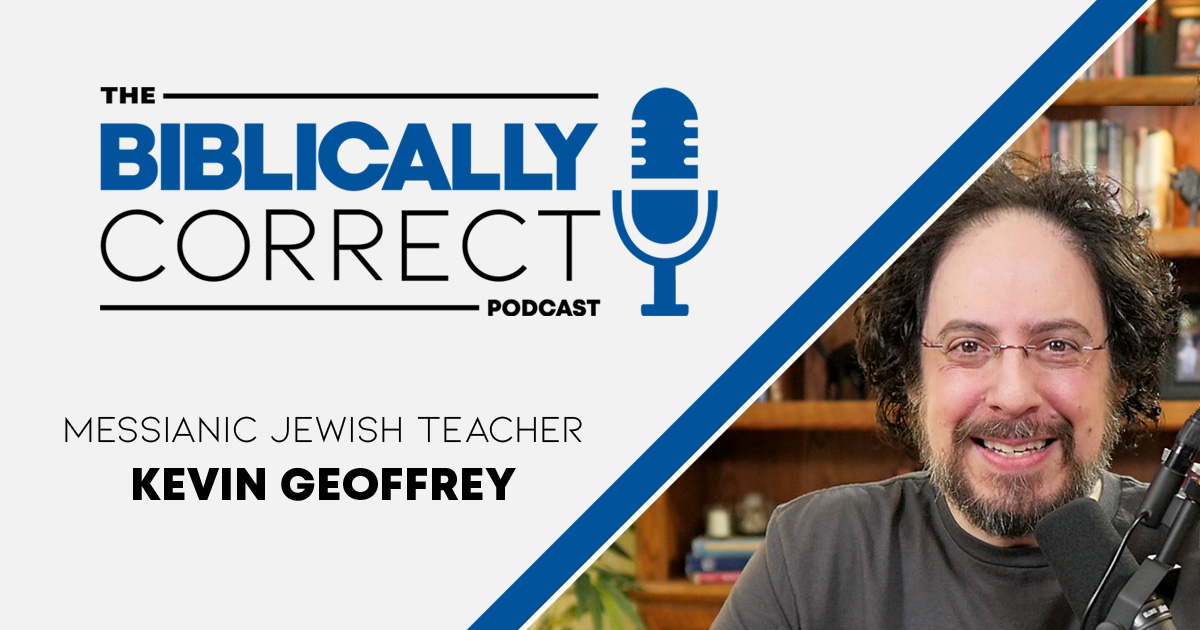
WATCH or LISTEN TO the full teaching on The Biblically Correct Podcast!
Go to https://www.biblicallycorrectpodcast.org/ep29


How do you observe Rosh Hashanah?
Thank you
Shalom Muriel. We remember God’s character and attributes, what He’s done for us, etc. and then shout those things in praise to Him. We do this throughout the day, sometimes with musical instruments, sometimes only with our voices. I hope that helps!
Clarity is much appreciated in this present world and all it’s struggles.